Auslastung pro Mitarbeiter im Blick behalten
Überlastung erkennen, bevor sie zur Belastung wird: Wie sichtbare Auslastung pro Mitarbeiter die Einsatzplanung fairer macht.
In jedem Elektrobetrieb stellt sich dieselbe Frage, oft mehrmals pro Woche: Wer hat noch Luft, wer ist seit Längerem stark eingeplant, und wer wartet zwischen zwei Aufträgen auf den nächsten Einsatz? Die Einsätze selbst sind meist gut geplant. Wie sich die Arbeit über die Wochen aber tatsächlich auf die einzelnen Leute verteilt, bleibt oft im Bauchgefühl. Und damit wird ein Teil der Planung zum Ratespiel.
Genau hier liegt ein blinder Fleck. Überlastung bemerkt man oft erst, wenn jemand ausfällt. Unterauslastung fällt selten auf, weil niemand sie meldet. Beides hat dieselbe Ursache: Es fehlt der Überblick, wie sich die Arbeit über die Wochen auf die einzelnen Monteure verteilt.
Warum Auslastung mehr ist als eine Zahl
Auslastung klingt nach Controlling. In der Praxis ist sie aber vor allem eine Frage von Fairness und Gesundheit. Wenn ein Teil der Mannschaft dauerhaft am oberen Limit läuft und andere immer wieder Leerlauf haben, entsteht auf beiden Seiten Unzufriedenheit.
Über längere Zeit wird daraus ein Problem. Wer Woche für Woche über der eigenen Kapazität eingeplant ist, kommt irgendwann an die Grenze. Das zeigt sich nicht an einem einzelnen Tag, sondern in der Summe vieler Wochen. Eine gute Kapazitätsplanung im Bau ist deshalb kein Kontrollinstrument, sondern eine Frühwarnung, auch im Sinne der Work-Life-Balance der Mitarbeitenden.
Vom Bauchgefühl zur sichtbaren Verteilung
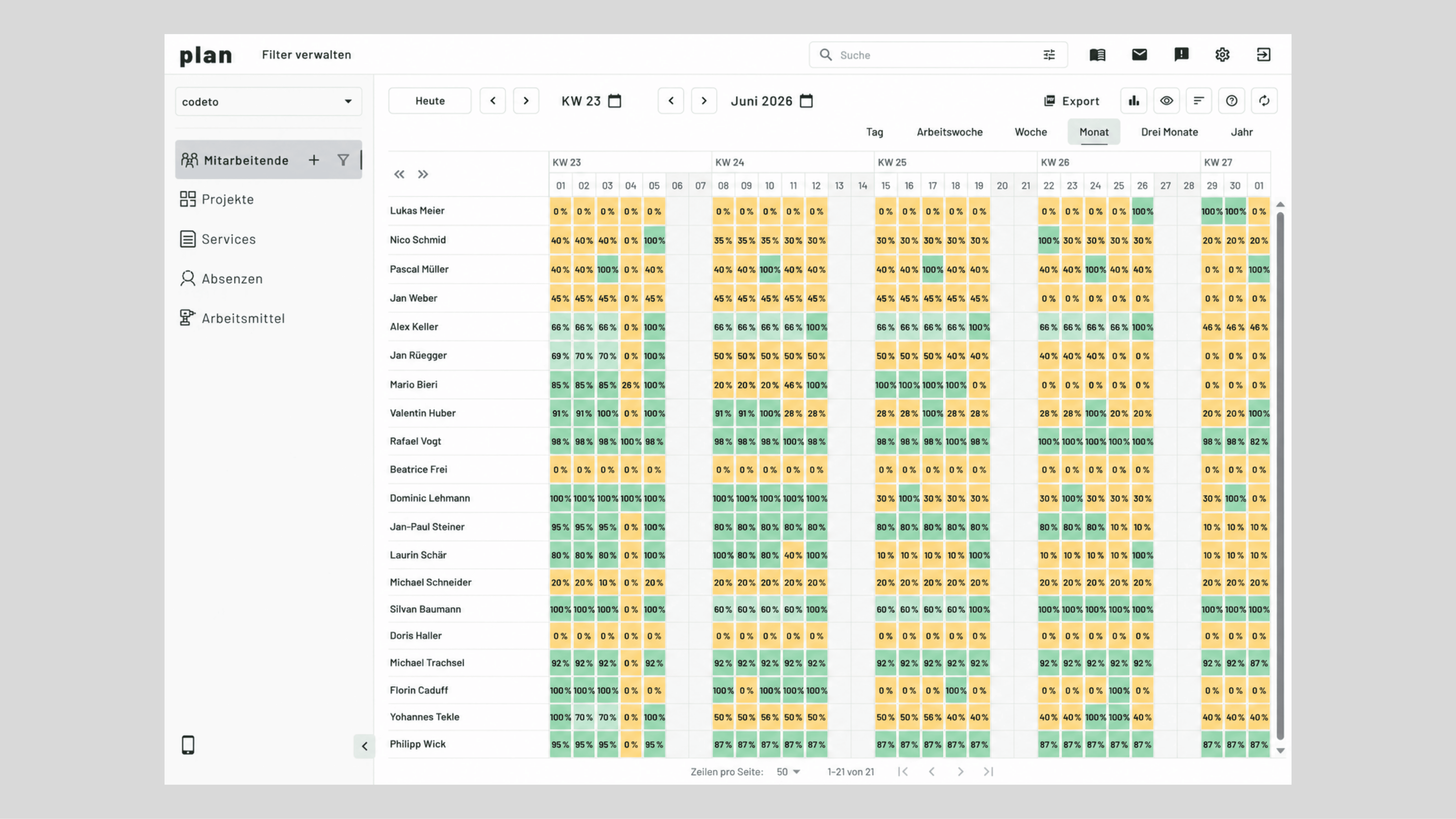
Eine Auslastungsübersicht zeigt für jeden Mitarbeitenden, wie hoch die Belastung ist, je nach gewählter Ansicht pro Tag, Woche, Monat oder Jahr. Farben machen sofort sichtbar, wo es eng wird und wo Reserve ist. Sobald jemand über hundert Prozent kommt, wird die Zelle rot.
Das System verhindert eine Überbuchung dabei nicht. Man kann jemanden bewusst über die Sollzeit hinaus einplanen, wenn es nötig ist. Es macht die Überlast nur sichtbar, statt sie zu verstecken. Wer rot sieht, hat mehr Arbeit verteilt als die hinterlegte Sollzeit zulässt, und entscheidet selbst, ob das so bleiben soll.
Das verändert die Personalplanung im Bau spürbar. Statt den nächsten freien Namen zu nehmen, sieht man, wer realistisch noch Kapazität hat. Ein kurzfristiger Ausfall lässt sich dort auffangen, wo noch Spielraum ist. Und Leerlauf wird sichtbar, bevor er zum stillen Kostenfaktor wird.
Was Betriebe konkret davon haben
Wenn klar ist, wer wann wie stark eingeplant ist, fallen viele Rückfragen und Telefonate weg. Die Planung wird zur gemeinsamen Grundlage, gerade wenn die Monteure unterwegs sind und die mobile Einsatzplanung direkt auf dem Smartphone sehen.
Wer die eigene Auslastung kennt, kann Kunden realistisch einschätzen, was machbar ist und was nicht. Das schafft am Ende mehr Verbindlichkeit, als jeden Auftrag sofort zuzusagen.
Und es geht auch ums Team. Wenn die Arbeit einigermassen gleichmässig verteilt ist und Überlastung früh auffällt, fühlen sich die Leute fairer behandelt. In einer Branche mit knappen Fachkräften ist das ein Grund mehr, zu bleiben.